


Signs Your Water Softener Needs Repair: When to Call a Pro
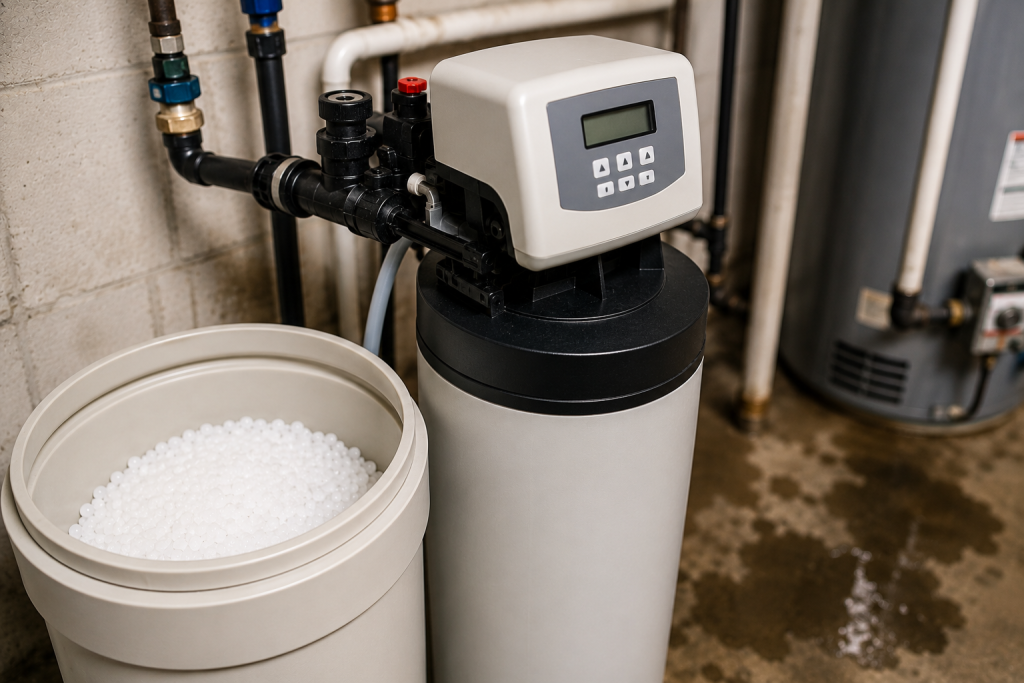
Key Takeaway: A return of hard water, unusual noises, leaks, frequent regeneration, or unexplained changes in salt and water use can all be signs that your water softener needs repair. Some problems have simple causes you can check yourself, while persistent performance issues or mechanical problems are best diagnosed by a professional before they become more expensive. A water softener usually works quietly in the background, so when something changes, you may notice the effects around your home before you realize the system itself has a problem. Cloudy glassware returns. Faucets develop mineral deposits. Soap stops lathering as easily. Maybe the softener suddenly seems to be regenerating far more often than usual. Recognizing the signs your water softener needs repair early can help you address the underlying problem before hard water becomes an everyday frustration again. It may also help protect water heaters, plumbing fixtures, dishwashers, washing machines, and other equipment from renewed mineral buildup. Not every symptom means your softener needs an expensive repair. Sometimes the solution is as simple as adding salt or correcting a setting. The key is knowing what you can safely check yourself and when it’s time to bring in a water treatment professional. Quick Facts About Water Softener Problems Hard water returning is a major clue. New scale, spotting, or poor soap lather can indicate the softener is no longer reducing hardness effectively. Not every problem requires a technician. Low salt, a salt bridge, incorrect settings, or an accidentally engaged bypass valve may be simple to identify. Frequent regeneration deserves attention. Unexpected cycling may indicate incorrect settings, changing water demand, or an internal system problem. Early diagnosis can prevent bigger headaches. Persistent leaks, unusual noises, or declining performance should be evaluated before the problem becomes more serious. How Do You Know If Your Water Softener Needs Repair? Your water softener may need repair if hard water symptoms return, the system behaves differently than usual, or basic troubleshooting doesn’t restore normal performance. One of the easiest ways to spot a problem is to pay attention to changes around your home. A properly operating ion-exchange softener reduces calcium and magnesium, the primary minerals responsible for water hardness. If those minerals begin making it through the system again, familiar hard water problems may gradually return. You might notice white deposits around faucets, spots on dishes, soap scum in the shower, or laundry that doesn’t feel the way it normally does. These symptoms don’t automatically prove the softener has failed, but they are good reasons to investigate. Changes in the equipment itself matter, too. New noises, visible leaks, unusually frequent regeneration, error messages, or unexpected salt consumption can indicate that something inside the system needs attention. Why Is Hard Water Coming Back? If your water suddenly feels harder again, the softener may not be regenerating correctly or could have a problem with its salt supply, settings, valves, or resin. Start with the simplest possibility: check the brine tank. If the salt level is too low, the system may not have enough brine available to properly regenerate the resin responsible for removing hardness minerals. Salt can also form a hardened crust inside the brine tank known as a salt bridge. From above, the tank may appear to contain plenty of salt even though an empty space has developed underneath the hardened layer. When that happens, the salt can’t dissolve properly into the water below. If the salt supply looks normal, check whether the softener has power, whether the bypass valve is in the correct position, and whether the system’s basic settings appear accurate. If everything looks normal but hard water continues, a deeper mechanical or resin-related issue may be responsible. Professional Insight: Don’t diagnose a softener based on water “feel” alone. A hardness test performed before and after the system can show whether the softener is actually reducing hardness and give a technician useful information for narrowing down the cause. Should a Water Softener Make Strange Noises? Some noise during regeneration is normal, but new banging, grinding, or persistent mechanical sounds should be investigated. A water softener isn’t completely silent. During regeneration, you may hear water flowing as the system cleans and recharges its resin bed. If you’ve owned the system for a while, you’re probably familiar with its normal sounds. What matters is a noticeable change. Banging, clunking, grinding, or other sounds that weren’t there before can point to problems with valves, motors, internal components, or water flow. Rather than repeatedly resetting the unit or ignoring a new mechanical sound, have the system evaluated if the noise persists. Catching a worn or malfunctioning component early may prevent a more disruptive failure later. Why Is My Water Softener Leaking? A leaking water softener can result from loose connections, damaged seals, valves, hoses, or other components and should be addressed promptly. Start by determining where the moisture is coming from. Water near the unit isn’t always caused by the softener itself, so inspect nearby plumbing and connections as well. If the leak is clearly coming from the system, avoid dismantling internal components unless you’re trained to work on the equipment. Even a relatively small leak can cause damage to flooring or nearby materials if it’s allowed to continue. Don’t Ignore an Active Leak: If water is actively leaking from your softener, address it promptly. Follow the manufacturer’s instructions for safely bypassing or shutting down the equipment if necessary, and contact a professional if you cannot identify or safely correct the source. Electrical components and standing water should always be treated with caution. Why Is My Water Softener Using So Much Water or Salt? An unexplained increase in water or salt use can indicate that your softener is regenerating more frequently than necessary or isn’t operating efficiently. Water softeners periodically regenerate to recharge their resin. How often that needs to happen depends on your water hardness, household water consumption, system capacity, and equipment settings. If regeneration suddenly becomes much more frequent without a corresponding change in household water use, something